
30 I can name. More I can't.
Every entry below was built and shipped, and every one is real. It is not the whole list: a good share of the work sits under NDA and never gets a public name.
Work you can look at.

Enterprise AI expert marketplace: four models score every candidate in parallel, with hybrid fraud detection and RAG-powered semantic matching.
Challenge. Trust and relevance at scale — how do you verify that an "AI expert" is actually an expert, and match them to the right project without manual review?
Solution. Built a LangChain-orchestrated pipeline where 4 models (LLaMA, Mistral, GPT, Gemini) evaluate each candidate in parallel across different dimensions. Hybrid fraud detection layers LLM semantic analysis with ML anomaly detection to catch inconsistencies rule-based systems miss. RAG-powered matching via Pinecone/Weaviate replaced keyword search entirely.
Techniques. Multi-model ensemble scoring · LangChain chain orchestration · RAG with Pinecone & Weaviate · Hybrid fraud detection (LLM + ML) · Parallel async evaluation pipelines

Real-time crypto analytics with sub-second latency and unsupervised anomaly detection on wallet clustering.
Challenge. On-chain data moves fast — thousands of transactions per second across multiple chains. Visualizing this in real-time with sub-second latency while also detecting anomalies requires a carefully engineered pipeline.
Solution. WebSocket streaming pipeline with Node.js backend processing live on-chain data. D3.js-powered BubbleMap visualization renders wallet clusters and transaction flows in real-time. Unsupervised anomaly detection runs alongside, flagging unusual wallet clustering and transaction velocity patterns invisible in standard charting tools.
Techniques. WebSocket streaming for sub-second updates · Unsupervised anomaly detection on transaction patterns · D3.js BubbleMap visualization · Real-time on-chain data processing
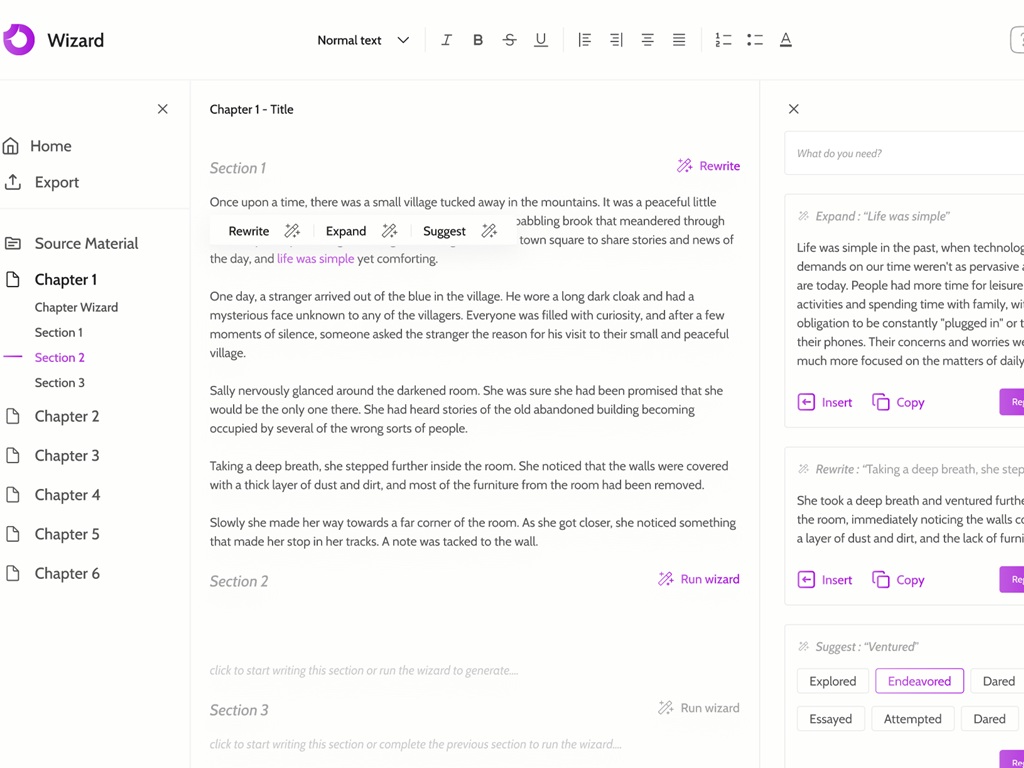
AI book-writing assistant with multi-stage prompt pipelines and stateful chains that keep characters consistent across a whole book.
Challenge. AI-generated long-form content loses narrative consistency across chapters. Context windows can't hold an entire book, so earlier plot points get forgotten, characters drift, and themes fragment.
Solution. Multi-stage prompt pipeline: outline generation first, then structured drafting chapter-by-chapter, then revision loops. Stateful prompt chaining carries key narrative elements (character states, plot threads, themes) forward across chapters. Context window management ensures the AI always has the right context at the right stage.
Techniques. Multi-stage prompt pipelines (outline → draft → revise) · Stateful prompt chaining across chapters · Context window management · GPT + Gemini dual-model workflow · WordPress integration for publishing

Authors upload a manuscript and map character voices; dialogue is detected and voiced automatically into a finished audiobook.
Challenge. Converting books to audiobooks is expensive and slow. Authors need a way to assign different voices to different characters, handle narration vs dialogue, and generate hours of audio without manual recording.
Solution. Built a platform where authors upload text files, map character names to ElevenLabs voices, and the system automatically detects dialogue lines and assigns the right voice. Narration gets a separate narrator voice. WordPress integration handles publishing and distribution.
Techniques. ElevenLabs API integration for voice synthesis · Dialogue detection and character voice mapping · Automated audio generation pipeline · WordPress publishing integration

MindAI SwapBot
LLM-driven Telegram trading bot built for MindAI. Natural language swaps plus market making, sniping and other automated strategies, all executed on-chain.
Challenge. Users describe trades in plain language, and phrasing varies wildly, so a misread instruction moves real money. On top of that the bot had to run automated strategies where timing is as unforgiving as correctness: market making has to quote continuously, sniping has to fire the moment a condition is met.
Solution. An LLM intent-parsing pipeline normalizes natural language into structured trade parameters, and anything ambiguous triggers a clarification prompt instead of a wrong trade. Alongside it run the automated strategy modes, market making, sniping and other on-chain execution paths, each with confirmation callbacks so nothing fires silently.
Techniques. LLM intent parsing for natural language trades · Ambiguity detection with clarification prompts · Market making strategy execution · Sniping with condition triggers · On-chain transaction execution · Telegram bot integration
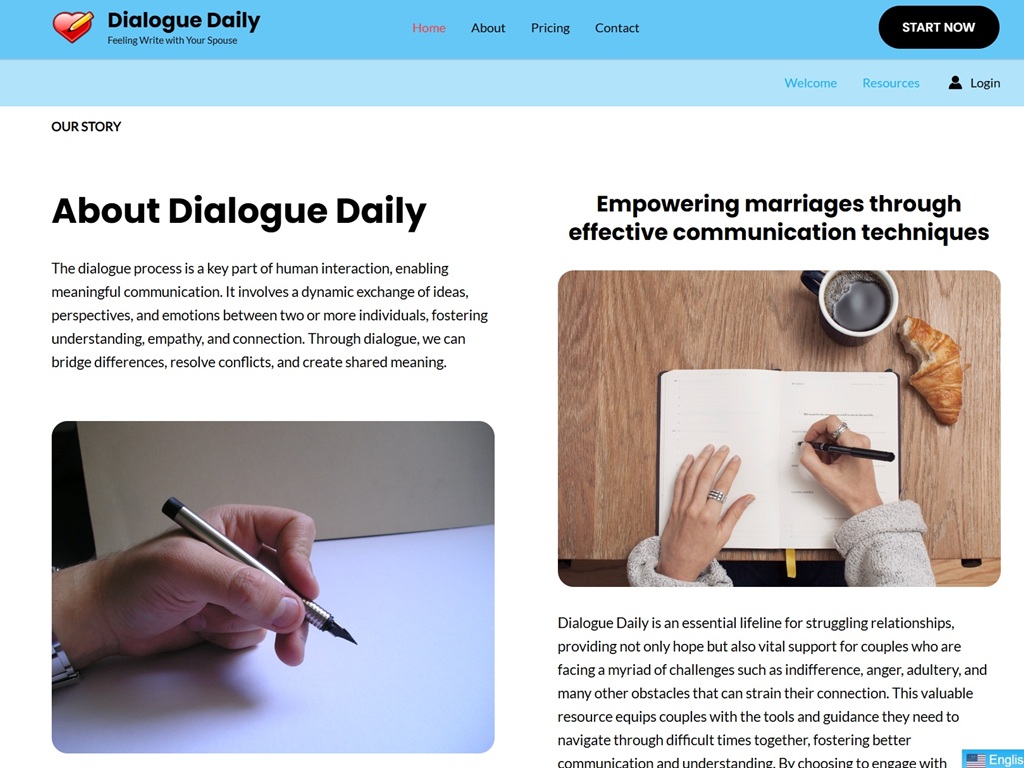
Relationship and marriage counseling platform with subscription workflows and content delivery. A personal project built for one client over nine years, through two accidents that cut off contact entirely, and finally delivered.
Challenge. A nine-year journey — started on Upwork, survived two car accidents, and finally delivered. The client needed a counseling platform with content delivery, subscription management, and a seamless user experience.
Solution. Built a full-stack platform with React frontend, Node.js backend, subscription workflows, and content delivery pipelines. The project taught patience and persistence as much as engineering.
Techniques. Subscription workflow management · Content delivery pipelines · React + Node.js full-stack architecture
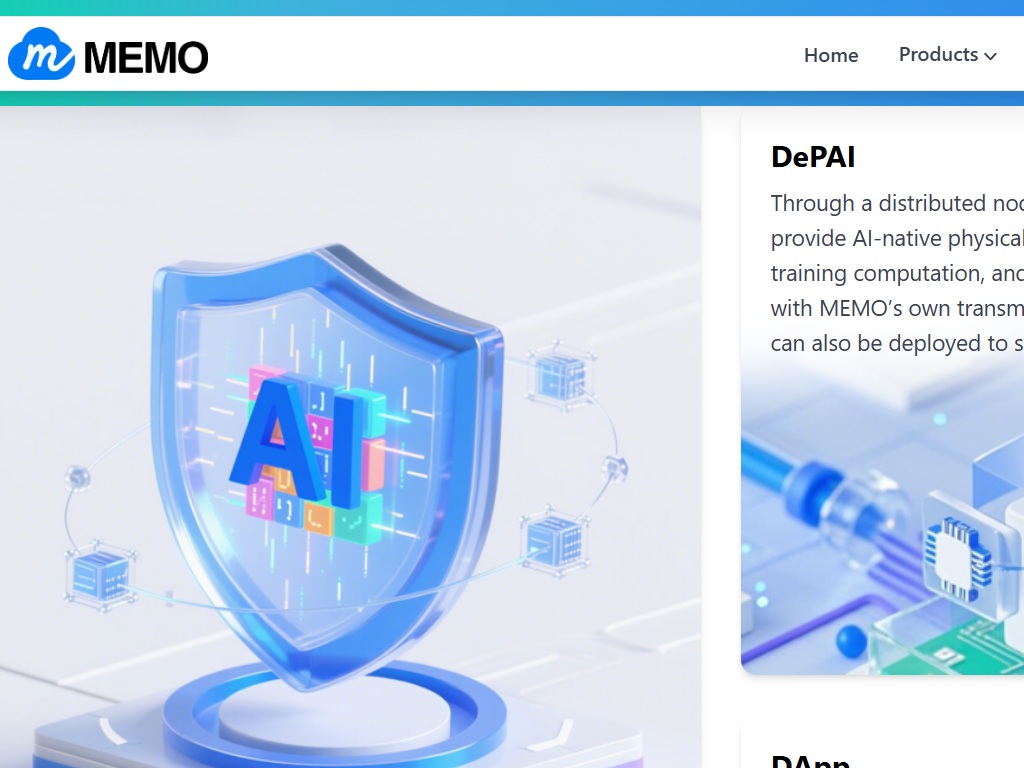
BRC-20 inscription platform and airdrop point system built on Bitcoin.
Challenge. BRC-20 inscription on Bitcoin requires specialized tooling. Users need a clean interface to create inscriptions, track them, and participate in airdrop point systems.
Solution. Built the frontend platform and website for MemoLabs — handling BRC-20 inscription creation, tracking, and an airdrop point system for community engagement.
Techniques. BRC-20 inscription interface · Airdrop point system · Web3 frontend integration
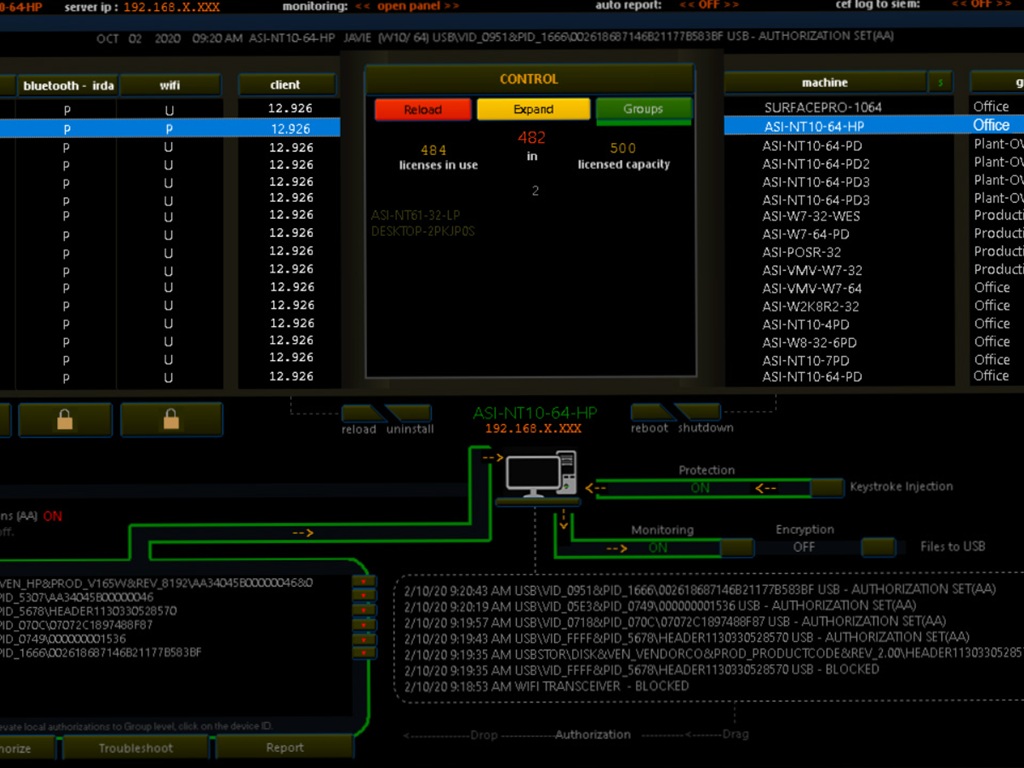
MR USBLock
Digital asset access control enforced by a kernel-mode filter driver built with the Windows WDK and DDK, with ML behavioural anomaly detection layered on top. Blocking removable storage reliably means sitting below the application layer, where the OS decides whether a device is allowed to exist at all.
Challenge. Device control written in user space is trivial to defeat: kill the process, unload the agent, boot from something else. Enforcement has to live in the kernel, at the point where Windows enumerates the device. Separately, a credential check says nothing about whether an authorised user has started behaving like an intruder.
Solution. Built a kernel-mode filter driver with the Windows WDK and DDK so access decisions happen below the application layer and cannot be switched off from user space, then layered ML behavioural anomaly detection above it so deviations from an established access baseline raise alerts before they turn into breaches.
Techniques. Kernel-mode filter driver (WDK/DDK) · Device enumeration and access control at the driver layer · User-mode service to driver communication · ML-based behavioural anomaly detection · Baseline deviation alerting · Defense in depth

Web Conferencing System
Browser counterpart to the MeetUp desktop client: WebRTC peer orchestration, a signaling server, and multi-party rooms.
Challenge. Delivering low-latency, multi-party audio and video in the browser required managing WebRTC peer connections, signaling, and media negotiation reliably across networks and devices.
Solution. Built a Node.js signaling server with Socket.io, orchestrated WebRTC peer connections for multi-party rooms, and used MongoDB for room and session state.
Techniques. WebRTC peer-connection orchestration · Node.js + Socket.io signaling server · Multi-party room management · Media negotiation across networks
Also shipped.
No screenshots for these. Most shipped before keeping screenshots was a habit, and several sit behind client walls.
AI engineering · 2022 to now
AI character generation and chat platform built for MindAI. Image generation with pose and style controls, alongside conversational AI companions. Powered by SPICE, shipped through v4.9.
Challenge. Building an AI platform that generates consistent character images across different poses and styles while maintaining coherent multi-turn conversations.
Solution. Integrated SPICE AI tools for image generation with pose and style controls. Conversational AI companions maintain context across sessions. Scaled to v4.9 with active users.
Techniques. SPICE AI image generation · Pose and style control pipelines · Multi-turn conversational AI · Character consistency across generations
Lottery Platform
High-concurrency lottery backend in Rust: 100,000 simultaneous ticket purchases with atomic transactions and verifiable draws.
Challenge. 100,000 users buying lottery tickets simultaneously creates extreme write contention on the database. Every ticket purchase must be atomic — no double-sales, no lost tickets, no race conditions. Traditional web frameworks buckle under this load, and a single failed transaction means a real user loses money.
Solution. Built the backend in Rust for zero-cost abstractions and predictable memory management. PostgreSQL handles transactional integrity with row-level locking and SERIALIZABLE isolation for ticket sales. Connection pooling with bounded async tasks prevents resource exhaustion under peak load. Svelte frontend delivers a lightweight client-side experience with real-time WebSocket updates for draw results and ticket status.
Techniques. Rust async runtime for high-concurrency handling · PostgreSQL row-level locking with SERIALIZABLE isolation · Bounded connection pooling to prevent resource exhaustion · WebSocket real-time draw updates · Atomic ticket purchase transactions · Svelte reactive frontend with minimal bundle size
Drive3
Web3 decentralized storage platform with blockchain integrity verification and distributed redundancy.
Challenge. Centralized storage has single points of failure. Building a Web3 storage platform that distributes files across a decentralized network while maintaining reliability and speed.
Solution. Built a Web3 decentralized storage platform leveraging blockchain for file integrity verification and distributed nodes for storage redundancy.
Techniques. Decentralized file storage · Blockchain integrity verification · Distributed node architecture
Contact Aggregation System
Large-scale contact collection with rate-limited scraping workers, validation, and fuzzy deduplication pipelines.
Challenge. Collecting contact data across thousands of heterogeneous sources without getting blocked, while keeping the resulting dataset clean enough to actually use.
Solution. Built rotating, rate-limited scraping workers with headless-browser fallbacks for JavaScript-heavy sites, then ran every record through validation and fuzzy deduplication before export.
Techniques. Headless-browser scraping with rate limiting · Validation and fuzzy deduplication pipelines · Scheduled collection jobs with retry logic
AWS-NovaFlex
Extension product for Advanced Web Strategies that widens what an AI agent can do inside WordPress through the Novamira MCP server. darianwaing.com is the demonstration: every page, the header template, the design system and the whole image pipeline were built by an agent calling it, with no page-builder UI touched by hand.
Challenge. An AI agent connected to WordPress over MCP can post and edit, but building a real site needs much more: theme settings, page-builder trees, media pipelines, design rules, arbitrary server-side execution. Every capability the agent lacks is a point where a human has to take the keyboard back.
Solution. Built AWS-NovaFlex as an extension layer on top of the Novamira MCP server, broadening the surface an agent can call and hardening the parts that break silently, then proved it end to end by having an agent design and build this site.
Techniques. WordPress ability design for agents · Page-builder tree construction through the document API · Server-side PHP execution surface · Media upload and attachment pipeline · Design-system validation for generated output
Real-Time Speech Interpreter
Real-time speech interpretation built in Rust, on my own time. Speak Chinese and the English interpretation lands live in an actual call, working inside Google Meet, Zoom and Telegram rather than in a separate app the other side cannot hear.
Challenge. Interpretation is only useful if it arrives inside the meeting people are already in. Chinese speech has to be captured, recognised, translated into English and spoken back with low enough latency to hold a conversation, while feeding audio into platforms that were never designed to accept a third party in the pipeline.
Solution. Built the pipeline in Rust for predictable latency and memory behaviour under continuous streaming, and routed the output so it presents to Google Meet, Zoom and Telegram as a normal audio source, which is what lets it work in a real call instead of a demo.
Techniques. Rust streaming audio pipeline · Real-time Chinese speech recognition · Chinese to English machine translation · Virtual audio device routing · Low-latency buffering for conversational turn taking · Integration with Google Meet, Zoom and Telegram
Full-stack at scale · 2019 to 2022
MR Pay
Alipay-scale digital payments: blockchain-inspired transaction signing, multi-party settlement, and scalable backend services.
Challenge. Building a payment platform at Alipay scale — handling secure transactions, multi-party settlement, and preventing double-spending without a distributed ledger.
Solution. Designed blockchain-inspired transaction signing where every transaction gets a cryptographic signature. Multi-party settlement logic handles vendor splits, refunds, and escrow. Built scalable backend services supporting both web and mobile clients.
Techniques. Blockchain-inspired transaction signing · Multi-party settlement logic · Cryptographic transaction verification · Scalable payment architecture
MR Bay
Alibaba-scale e-commerce ecosystem: order processing, vendor management, inventory, and payment integration across storefronts.
Challenge. Building an e-commerce platform at Alibaba scale — order processing, vendor management, inventory tracking, and payment integration across multiple storefronts with real traffic.
Solution. Architected a full-stack ecosystem with React frontend, Node.js backend, and MongoDB. Integrated MR Pay for payment processing. Every component had to handle real traffic at real volume — no staging environment luxury.
Techniques. Multi-storefront architecture · Real-time inventory management · Vendor management system · Payment integration with MR Pay
StrongGate
280 Hikvision cameras, YOLO vehicle detection, license plate recognition, and PLC-controlled physical gates, plus thermal-imaging attendance during COVID.
Challenge. 280 Hikvision cameras feeding live video to control physical access gates. Every gate open/close cycle had to be reliable — software failures meant real vehicles stuck at real gates. License plate recognition had to work in varying lighting, weather, and angles.
Solution. Built a YOLO-based object detection pipeline for vehicle detection, OpenCV for license plate recognition, and face detection for driver verification. PLC integration handles physical gate control with fail-safe defaults. Thermal imaging extension during COVID added body temperature screening on top of access control.
Techniques. YOLO object detection for vehicles · OpenCV license plate recognition · Face detection for driver verification · PLC gate control with fail-safe · Thermal imaging anomaly detection
Reshoper
Restaurant and shopping mall management across web, app, and desktop, with POS integration and reporting.
Challenge. Restaurants and shopping malls need unified management — POS, inventory, staff scheduling, reporting — across both web and desktop interfaces. Different environments, same data.
Solution. Delivered enterprise-grade management platform with web and app interfaces plus desktop-based restaurant management software. POS integration handles real-time transactions and inventory updates.
Techniques. Cross-platform architecture (web + desktop) · POS integration · Real-time inventory and staff management · Enterprise reporting dashboards
Startup years · 2015 to 2019
MR Eye
Endpoint monitoring with screen recording, keystroke tracking, and behavioral anomaly detection.
Challenge. Enterprise security requires monitoring endpoints without blocking productivity. The system had to capture screen activity, track keystrokes, and detect anomalous behavior — all without noticeable performance impact.
Solution. Built a lightweight endpoint agent with screen recording, keystroke tracking, and behavioral anomaly detection. The anomaly detection engine flags unusual patterns — mass file copies, off-hours access, unexpected application usage — for security review.
Techniques. Low-overhead screen recording · Keystroke pattern tracking · Behavioral anomaly detection engine · Real-time security alerting
MeetUp
Windows desktop video conferencing with real-time multi-party audio and video streaming.
Challenge. Real-time video conferencing on Windows desktop with multi-party audio/video streaming. Latency, synchronization, and bandwidth management are all critical.
Solution. Built a Windows desktop application with real-time audio/video streaming. Later extended to a web-based version using Node.js, MongoDB, and WebRTC for browser-based communication.
Techniques. Real-time audio/video streaming · WebRTC for browser-based conferencing · Multi-party synchronization · Bandwidth-adaptive streaming
TSolution
Office suite built on LibreOffice; served as PM for the main UI and developed the HWP 5.0 document parsing module. The printed module docs covered three office walls.
Challenge. HWP is a proprietary Korean document format with sparse documentation, and LibreOffice’s internal module architecture is famously vast — the printed class documentation covered three office walls.
Solution. Reverse-engineered the HWP 5.0 binary format against the published spec, mapped it onto LibreOffice’s document model through the UNO API, developed the parsing module hands-on, and served as PM for the main UI.
Techniques. HWP 5.0 binary format parsing · LibreOffice UNO API integration · Document model mapping · PM for the main UI
KakaoTalk Desktop Client
Desktop client and messaging automation for the dominant Korean messenger, built on protocol analysis.
Challenge. Building a desktop client and automation layer for a closed, proprietary messaging protocol meant reverse-engineering the wire format and keeping up with server-side changes without any official API.
Solution. Analyzed the KakaoTalk protocol through packet inspection, implemented a compatible desktop client in C# on Windows, and layered messaging automation on top with graceful handling of protocol updates.
Techniques. Protocol reverse engineering via packet analysis · Windows desktop client in C# · Messaging automation layer · Resilience to server-side protocol changes
CAPTCHA Recognition
CNN-based character recognition on deliberately distorted text, built as TensorFlow and Keras were first emerging.
Challenge. Reading deliberately distorted CAPTCHA text required tolerance to noise, warping, and overlapping characters — well beyond what template matching could handle, at a time when deep-learning tooling was brand new.
Solution. Built an image-processing front end (denoise, segment, normalize) feeding CNN models trained in TensorFlow/Keras to recognize characters, iterating on architectures as the frameworks matured.
Techniques. Image preprocessing and character segmentation · CNN-based character recognition (TensorFlow/Keras) · Synthetic training-data generation · End-to-end recognition pipeline
APK Reverse Engineering
Android and Unity build analysis for auditing and reconstruction: smali, DEX, Mono and IL2CPP internals.
Challenge. Understanding shipped Android and Unity applications with no source meant decompiling, deobfuscating, and reconstructing program behavior across both Dalvik bytecode and Unity’s IL2CPP/Mono internals.
Solution. Reverse-engineered APKs through smali/DEX analysis and native inspection, mapped Unity 4.x–5.6 build internals, and reconstructed the relevant logic for auditing and rebuilding.
Techniques. Smali / DEX decompilation and analysis · Unity 4.x–5.6 build internals (Mono/IL2CPP) · Native code inspection · Behavior reconstruction
Sales Management System
Orders, inventory, and reporting for internal sales operations.
Challenge. Internal sales operations needed a single system tying together orders, inventory, and reporting, reliable enough to run day-to-day business.
Solution. Built a full sales management platform on ASP.NET/C# with SQL Server, covering order entry, inventory tracking, and management reporting for internal teams.
Techniques. ASP.NET / C# business application · SQL Server data modeling · Order and inventory workflows · Management reporting
Internal Management System
Centralized remote security and operations oversight for administrators.
Challenge. The company needed centralized, remote oversight of internal systems and security-relevant activity, accessible to administrators without exposing sensitive infrastructure.
Solution. Built internal management and security-oversight tooling on ASP.NET/IIS with Node.js services, providing administrators a centralized dashboard over internal resources and activity.
Techniques. ASP.NET / IIS internal tooling · Node.js supporting services · Centralized admin dashboards · Remote security oversight
Where it started · 2014 to 2015
Cocos2d Game Ports
Two SWF Flash games rebuilt in Cocos2d for Android and iOS from one shared C++ codebase, right after the new-hire Tetris code competition.
Challenge. Reimplementing Flash/SWF games on Cocos2d for both Android and iOS meant rebuilding game logic and asset pipelines that originally targeted the Flash runtime, on two mobile platforms at once.
Solution. Recreated the games’ mechanics and scene flow in Cocos2d, rebuilt the asset and animation pipeline for mobile, and shipped to both Android and iOS from a shared C++ codebase.
Techniques. SWF-to-Cocos2d game reimplementation · Shared C++ codebase for Android + iOS · Mobile asset and animation pipeline
3D Modeling Tool
Custom 3D modeling on the Autodesk Revit SDK and its BIM object model; the first lesson in living inside a large third-party SDK.
Challenge. Integrating with the Autodesk Revit SDK meant learning a massive, opinionated BIM object model and API surface, then bending it toward custom 3D modeling behavior.
Solution. Studied the Revit SDK object model, built a modeling tool on top of its .NET API, and mapped custom modeling operations onto Revit’s document and element structures.
Techniques. Autodesk Revit SDK / .NET API integration · BIM object-model mapping · Custom 3D modeling operations
ArchDic
Offline dictionary of architectural terms with corpus-based indexing and fuzzy search, packaged for desktop with no network dependency.
Challenge. A dictionary app sounds trivial until you need fast offline lookup over a large domain-specific corpus with fuzzy matching — corpus theory turned out to be at the heart of it.
Solution. Built an indexed offline dictionary in C++/Qt with prefix and fuzzy search over a curated architectural-terms corpus, packaged for desktop with no network dependency.
Techniques. Corpus-based dictionary construction · Indexed offline full-text search · Prefix and fuzzy matching · Qt desktop packaging